Last updated 2026-07-25
TL;DR
Tesamorelin is a synthetic 44-amino acid analogue of growth hormone-releasing hormone (GHRH). It binds pituitary GHRH receptors and stimulates pulsatile, physiologic release of the body's own growth hormone, which raises IGF-1 and preferentially reduces visceral adipose tissue. It's FDA-approved only for HIV-associated lipodystrophy, based on phase 3 trials showing measurable visceral fat loss [1][8].
What is tesamorelin and how is it different from growth hormone itself?
Tesamorelin is not growth hormone. It's a synthetic analogue of growth hormone-releasing hormone (GHRH), the hypothalamic signal that tells the pituitary gland to make and release GH in the first place [1]. The molecule is a 44-amino acid peptide, essentially human GHRH(1-44) with a trans-3-hexenoic acid group added to the front end, which slows its breakdown by the enzyme DPP-4 and gives it a longer working window than native GHRH [2][1]. That distinction matters clinically. Injecting GH directly overrides the body's feedback loops. Tesamorelin instead works upstream, nudging the pituitary to do what it already does, just more of it. This is why tesamorelin is often described as working "physiologically": it preserves the pulsatile pattern of GH secretion rather than flooding the system with a flat, constant dose [3][1]. The brand name is Egrifta (and the newer ready-to-use version, Egrifta SV). It's manufactured for a single FDA-approved indication: reduction of excess visceral adipose tissue in HIV-infected patients with lipodystrophy [4]. Everything else you may have read about tesamorelin for general fat loss, anti-aging, or muscle gain is off-label extrapolation, not what the trials were built to test.
How does tesamorelin trigger growth hormone release at the receptor level?
Tesamorelin binds to GHRH receptors on somatotroph cells in the anterior pituitary. This is a G-protein-coupled receptor that, once activated, raises intracellular cyclic AMP (cAMP), which in turn triggers the synthesis and pulsatile secretion of growth hormone into the bloodstream [1][5]. The key word is pulsatile. The pituitary doesn't release GH continuously under normal physiology; it releases it in bursts, mostly during deep sleep, with quieter periods between pulses. Because tesamorelin acts on the same receptor as endogenous GHRH, it amplifies this natural rhythm rather than replacing it with a constant signal [1]. That's the theoretical reason GHRH analogues are considered gentler on the GH-IGF-1 feedback axis than direct GH injections, although the comparative long-term safety data head-to-head against rHGH in this specific population is thin. Once GH is released, it travels to the liver and other tissues and stimulates production of insulin-like growth factor 1 (IGF-1). IGF-1 is the downstream messenger that mediates most of GH's metabolic effects, including its role in lipolysis. Phase 3 trials in HIV lipodystrophy patients confirmed this chain works as expected: tesamorelin significantly increased IGF-1 levels compared to placebo, alongside the visceral fat reduction [4][6].
Why does tesamorelin reduce visceral fat specifically, not fat everywhere?
Visceral adipose tissue (the fat packed around the abdominal organs, not the fat under the skin) is unusually responsive to GH signaling. Visceral fat cells express more GH-sensitive lipolytic pathways than subcutaneous fat, so when GH rises via the GHRH-GH-IGF-1 axis, visceral depots tend to shrink preferentially [4][6]. A pooled analysis of two phase 3 trials in HIV patients with excess abdominal fat found tesamorelin reduced visceral adipose tissue by roughly 15 to 18 percent relative to placebo over 26 weeks, without a matching reduction in subcutaneous fat [6]. That selectivity is the whole basis of the approved indication. HIV-associated lipodystrophy specifically involves abnormal visceral fat accumulation, sometimes alongside subcutaneous fat loss in the face and limbs, and tesamorelin's mechanism happens to target the compartment that's actually the problem [4][7]. A separate trial looking at fat quality, more than quantity, found tesamorelin improved the character of remaining fat tissue (density and composition on imaging) independent of how much total fat mass changed [8]. That's a subtler finding worth knowing: some of the metabolic benefit may come from changing what the fat is doing, more than how much of it there is. This selectivity is also why tesamorelin isn't marketed as a general weight-loss drug. It's not designed to shrink subcutaneous fat on the arms or thighs, and it hasn't been studied as a weight-loss treatment in people without HIV-associated lipodystrophy.
What happens to liver fat and metabolic markers on tesamorelin?
Visceral fat and liver fat are closely linked, and several trials specifically tracked hepatic outcomes. A randomized, double-blind, multicenter trial in HIV patients with non-alcoholic fatty liver disease (NAFLD) found tesamorelin reduced hepatic fat fraction on MRI significantly more than placebo over 12 months, with some patients seeing resolution of steatohepatitis on biopsy [9]. A companion analysis found that visceral fat reduction on tesamorelin correlated with improved liver enzyme levels, suggesting the fat loss itself, not some separate mechanism, drives the hepatic benefit [10]. Transcriptomic work looking at liver tissue before and after treatment found tesamorelin altered gene expression patterns tied to lipid metabolism pathways, giving a molecular explanation for why hepatic fat drops alongside visceral fat [11][12]. A newer meta-analysis of randomized controlled trials pooled body composition, hepatic fat, and metabolic safety data across the tesamorelin trial base and confirmed the direction of these effects holds up across studies, more than in single trials [13]. None of this means tesamorelin is a treatment for NAFLD or fatty liver disease in the general population; the studies were done in people with HIV and excess abdominal fat, and that's the population the effect has been shown in.
Does tesamorelin affect inflammation or cognitive function too?
Visceral fat is metabolically active tissue that secretes inflammatory cytokines, so reducing it has downstream effects beyond the waistline. One trial found that tesamorelin's reduction in visceral adipose tissue was accompanied by measurable drops in inflammatory markers, and that the two changes tracked together statistically . More recent work has pushed into cognitive outcomes. A 2025 trial examined tesamorelin's effect on neurocognitive impairment in people with HIV and abdominal obesity, testing whether reducing visceral fat (and the systemic inflammation that comes with it) might also support brain function [5]. This is an active research area, not an established use, and it should be read as hypothesis-generating rather than proof that tesamorelin improves cognition. If you're considering tesamorelin, don't go in expecting cognitive benefits; that data is still early.
How is tesamorelin absorbed and cleared from the body?
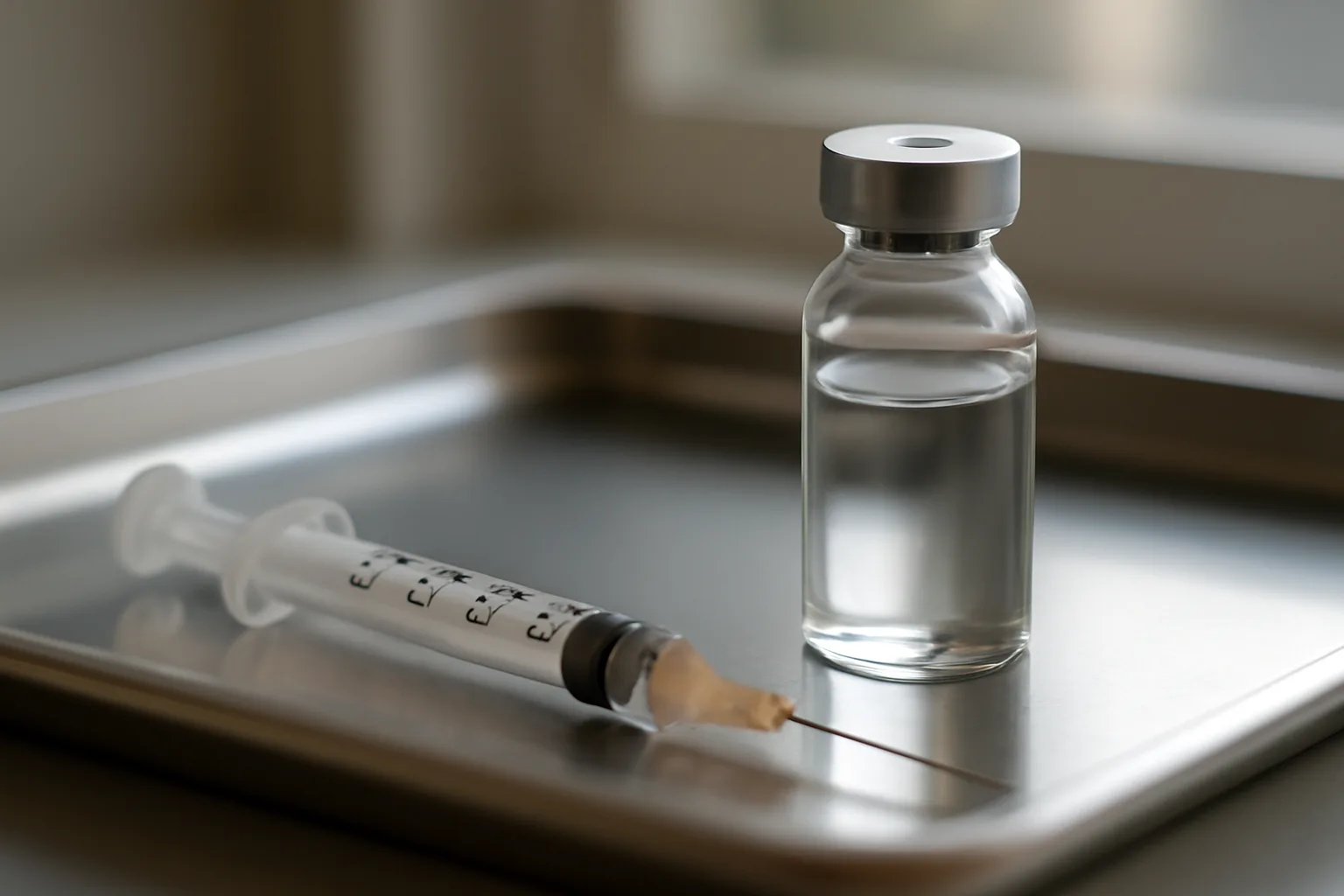
Tesamorelin is given as a once-daily subcutaneous injection, typically in the abdomen. A population pharmacokinetic analysis across HIV-infected patients and healthy subjects modeled how the drug is absorbed and eliminated, and found its kinetics are influenced by factors like body weight and injection site, which is part of why dosing and site rotation guidance exists [14]. Because tesamorelin is a peptide, it's broken down by proteolytic enzymes rather than metabolized by the liver's cytochrome P450 system, so classic drug-drug interaction concerns are lower than with many small-molecule drugs. That said, DPP-4 resistance built into the molecule (the modification distinguishing it from native GHRH) extends its half-life enough to support once-daily dosing rather than requiring multiple injections a day [2][1]. For practical guidance on injection technique and timing, see tesamorelin how to inject, tesamorelin injection sites, and best time to take tesamorelin peptide. Reconstitution technique also matters for how much active peptide actually reaches circulation; see how to reconstitute tesamorelin.
What is the actual FDA-approved indication for tesamorelin?
Tesamorelin (Egrifta, Egrifta SV) is FDA-approved for one specific use: reduction of excess visceral adipose tissue in HIV-infected patients with lipodystrophy [4]. You can confirm the approval status and labeling directly through Drugs@FDA, the FDA's own database of approved drug products [FDA Drugs@FDA database]. This is a narrow indication, and it's worth being precise about what it does and doesn't cover. The approval is not for general obesity, not for age-related GH decline, not for athletic performance, and not for cosmetic fat loss in people without HIV-associated lipodystrophy. The phase 3 evidence base that earned the approval was built entirely in HIV patients with excess abdominal fat [4][6]. A newer trial looked specifically at whether tesamorelin's effects hold up in the modern HIV treatment landscape, testing efficacy and safety in patients on integrase inhibitor-based antiretroviral regimens (the standard of care today, different from the regimens common when the original trials were run) [15]. That kind of updated evidence matters because HIV treatment has changed substantially since the original approval, and it's reassuring that the fat-reduction effect appears to persist. Use outside the approved indication is off-label. That doesn't automatically mean unsafe or ineffective, but it does mean the strength of evidence is different: you're relying on mechanism and extrapolation, not a matching phase 3 trial in your specific situation.
Is tesamorelin the same thing as HGH or a substitute for it?
No. HGH (human growth hormone, also called somatropin) is the hormone itself, given by injection to directly raise GH levels. Tesamorelin is a GHRH analogue that stimulates your own pituitary to release GH [1]. The practical difference is that tesamorelin depends on your pituitary having functional GHRH receptors and being able to respond; someone with pituitary failure that removes GH-producing capacity likely won't respond well to a GHRH analogue, whereas they might still respond to direct GH replacement. A 2021 review in Nature Reviews Drug Discovery covering the tesamorelin approval frames it within the broader category of GHRH-based therapeutics, distinct from direct GH replacement products, and discusses why the physiologic, pulsatile mechanism was seen as an advantage in the HIV lipodystrophy population specifically [1]. Growth hormone secretion naturally declines with age, and there's a body of research on GH's role broadly in aging males, but that line of research is about age-related GH decline generally, not tesamorelin specifically, and shouldn't be read as evidence for tesamorelin as an anti-aging therapy [16].
Does tesamorelin work the same in people without dorsocervical fat pads?
Not everyone with HIV-associated lipodystrophy has the same fat distribution pattern; some patients develop a dorsocervical fat pad (sometimes informally called a "buffalo hump") along with visceral fat gain, while others don't. A post hoc analysis of the phase 3 placebo-controlled trial specifically compared outcomes in patients with and without dorsocervical fat pads at baseline [17]. The practical takeaway is that tesamorelin's visceral fat-reduction effect wasn't limited to one particular fat-distribution phenotype; it worked across the different presentations of lipodystrophy studied in the trial, which is useful context if you're trying to figure out whether the drug's evidence base applies to your specific fat pattern [17]. This kind of subgroup analysis also points to why diagnosis matters: distinguishing lipodystrophy from ordinary abdominal weight gain is a real clinical skill, and getting that diagnosis wrong changes whether tesamorelin's evidence base even applies to your situation [7][18].
What are the known side effects tied to this mechanism?
Because tesamorelin raises GH and IGF-1, its side effect profile tracks what you'd predict from that mechanism. Injection site reactions (redness, itching, swelling) are common since it's a daily subcutaneous injection. Joint pain, muscle aches, and swelling in the extremities can occur, consistent with GH's known effects on fluid retention and connective tissue [3][2]. Because GH can affect glucose metabolism, blood sugar should be monitored, and tesamorelin carries precautions around use in people with poorly controlled diabetes. The original phase 3 program and its safety extension data tracked these effects over extended follow-up and found the profile was generally consistent with what's expected from a GH-axis-active drug, without new safety signals emerging over the longer exposure window [6]. A 2026 review of injectable peptide therapies for orthopaedic and sports medicine physicians flags that peptides acting on the GH axis, tesamorelin included, need monitoring for musculoskeletal side effects like joint pain and swelling, which clinicians should factor in when patients are already managing joint issues [19]. Separately, anti-doping researchers have developed detection methods specifically for GHRH synthetic analogues like tesamorelin, because these peptides are banned in competitive sport as performance-enhancing substances [20]. If you're a competitive athlete, this is a real consideration, not a theoretical one.
Where does the peptide itself come from, and does sourcing affect how it works?
Tesamorelin is manufactured as a lyophilized (freeze-dried) powder that must be reconstituted with sterile water before injection. As a synthetic peptide, its manufacturing involves solid-phase peptide synthesis and purification steps; broader peptide chemistry research (including newer ligation techniques for building complex peptides) continues to refine how peptides like this are synthesized and purified at scale . The mechanism itself doesn't change based on where the peptide comes from, assuming the peptide is correctly synthesized, pure, and properly stored and reconstituted. What does change is your confidence that the vial actually contains what the label says, at the stated concentration, without degradation products. Under U.S. law, bulk drug substances used in compounding are governed by specific FDA rules; tesamorelin's regulatory status in the compounding channel is worth understanding if you're evaluating compounded versus brand-name product . For readers trying to understand what a course actually costs and how that compares between brand-name Egrifta and other sourcing routes, see tesamorelin cost. Tesamorelin Co's provider-reviewed pathway is built around connecting patients with prescribers and a fulfilling pharmacy partner rather than compounding or manufacturing the peptide itself; the mechanism described in this article is the same regardless of which legitimate, prescribed sourcing route you use.
How long does it take for the mechanism to produce visible results?
Because tesamorelin works upstream of fat loss (stimulating GH, which raises IGF-1, which then drives lipolysis in visceral fat over time), results aren't immediate. The phase 3 trials measured visceral adipose tissue by CT scan at 26 weeks, and that's the timeframe the approved efficacy claims are based on [6]. IGF-1 levels typically rise within the first weeks of consistent dosing, but the downstream fat reduction takes months to become measurable on imaging. This lag matters for expectations. If you're several weeks in and don't see a visible waistline change, that's consistent with the trial timeline, not necessarily treatment failure. It also means stopping and restarting tesamorelin repeatedly, rather than committing to a full course, undermines the very mechanism that produces the benefit; the GH-IGF-1-lipolysis chain needs sustained stimulation to shift visceral fat mass meaningfully. For guidance on how long a course should run and what happens after stopping, see tesamorelin cycle length.
Frequently asked questions
What is tesamorelin's mechanism of action in simple terms?
Tesamorelin is a synthetic analogue of growth hormone-releasing hormone (GHRH). It binds GHRH receptors on the pituitary gland and stimulates the pituitary to release the body's own growth hormone in natural pulses. That GH raises IGF-1, which then drives fat breakdown, preferentially in visceral fat around the abdominal organs [4][10].
Is tesamorelin the same as growth hormone (HGH)?
No. HGH is the hormone itself, given directly. Tesamorelin is a GHRH analogue that stimulates your pituitary gland to release your own GH rather than supplying GH from outside. It depends on a functioning pituitary to work, which HGH replacement does not [4].
Why does tesamorelin target visceral fat instead of fat everywhere?
Visceral fat cells have more GH-responsive lipolytic activity than subcutaneous fat, so raising GH via the GHRH pathway preferentially shrinks the abdominal visceral compartment. Phase 3 trials found roughly 15 to 18 percent relative visceral fat reduction versus placebo, without a matching subcutaneous fat change [10].
What is tesamorelin FDA-approved for?
Tesamorelin (brand name Egrifta, Egrifta SV) is FDA-approved only for reduction of excess visceral adipose tissue in HIV-infected patients with lipodystrophy. You can verify this in FDA's Drugs@FDA database. Any other use, including general fat loss or anti-aging, is off-label [8].
How does tesamorelin affect IGF-1 levels?
Tesamorelin stimulates pituitary GH release, and GH in turn drives the liver to produce IGF-1. Phase 3 trials measured significant IGF-1 increases in tesamorelin-treated patients compared to placebo, confirming the GHRH-GH-IGF-1 signaling chain is active at the doses studied [8][10].
Does tesamorelin reduce liver fat too?
Yes, in trials of HIV patients with fatty liver disease. A randomized, double-blind trial found tesamorelin significantly reduced hepatic fat fraction over 12 months compared to placebo, and a related study linked this to correlating visceral fat and liver enzyme improvements [21][19].
How long until tesamorelin's mechanism produces visible fat loss?
The phase 3 trials measured visceral fat reduction by CT scan at 26 weeks, which is the evidence-backed timeframe. IGF-1 rises within weeks, but visible waistline changes from the downstream lipolysis effect generally take a few months of consistent daily dosing [10].
Can tesamorelin be used for general weight loss or bodybuilding?
That's off-label. The FDA approval and the phase 3 evidence are specific to visceral fat reduction in HIV-associated lipodystrophy. There's no matching trial evidence for general weight loss, cosmetic fat reduction in the general population, or athletic performance, and GHRH analogues are banned in competitive sport [7][8].
What side effects come from tesamorelin's mechanism?
Because it raises GH and IGF-1, expect possible joint pain, muscle aches, extremity swelling, and injection site reactions. Blood sugar monitoring matters since GH affects glucose metabolism. Safety extension data from phase 3 trials found this profile held steady over longer-term use [1][3][10].
Does tesamorelin work if someone doesn't have a dorsocervical fat pad?
Yes. A post hoc analysis of the phase 3 trial compared patients with and without a dorsocervical fat pad ('buffalo hump') at baseline and found the visceral fat reduction effect held across both groups, more than in one lipodystrophy fat-distribution pattern [23].
How is tesamorelin administered and absorbed?
It's given as a once-daily subcutaneous injection, usually in the abdomen. A population pharmacokinetic study modeled its absorption and clearance across HIV-infected and healthy subjects, finding factors like body weight and injection site influence exposure levels [20].
Does tesamorelin affect inflammation markers?
Yes. A trial in HIV patients found that tesamorelin's visceral fat reduction was accompanied by drops in inflammatory markers, with the two changes tracking together, consistent with visceral fat being a metabolically active, inflammatory tissue [26].
Is tesamorelin's mechanism different from other GH-axis peptides?
Tesamorelin specifically targets the GHRH receptor with a DPP-4-resistant modification that extends its action long enough for once-daily dosing. Other GH-axis peptides work on different receptors (like ghrelin mimetics) or have different half-lives, so effects and dosing schedules aren't interchangeable [3][4].
Sources
- Injectable Peptide Therapy: A Primer for Orthopaedic and Sports Medicine Physicians, PMID 41476424: Tesamorelin works physiologically by preserving pulsatile GH secretion, and joint/muscle side effects are part of its known profile
- Therapeutic Peptides in Orthopaedics, PMID 41490200: GH-axis peptides including tesamorelin require monitoring for musculoskeletal side effects such as joint pain and swelling
- Tesamorelin, PMID 31644039: Tesamorelin is a modified 44-amino acid GHRH analogue with a DPP-4-resistant modification extending its half-life
- Tesamorelin, Nature Reviews Drug Discovery, PMID 21283099: Tesamorelin binds the pituitary GHRH receptor, raising cAMP and stimulating pulsatile GH release, distinct from direct GH replacement
- Efficacy and safety of tesamorelin in people with HIV on integrase inhibitors, PMID 38905488: Tesamorelin's fat-reduction efficacy and safety were confirmed in patients on modern integrase-inhibitor-based antiretroviral regimens
- Advances in the detection of growth hormone releasing hormone synthetic analogs, PMID 34665524: Anti-doping science has developed detection methods for GHRH synthetic analogues like tesamorelin because they are banned in competitive sport
- Effects of tesamorelin (TH9507) pooled phase 3 analysis, PMID 20554713: Pooled phase 3 trials found tesamorelin reduced visceral adipose tissue roughly 15-18% relative to placebo and raised IGF-1, forming the basis of FDA approval for HIV-associated lipodystrophy
- Effects of Tesamorelin on Neurocognitive Impairment in Persons With HIV, PMID 39813152: A 2025 trial examined whether tesamorelin's visceral fat and inflammation reduction affects neurocognitive impairment in HIV patients with abdominal obesity
- Tesamorelin: a review of its use in HIV-associated lipodystrophy, PMID 21668043: Phase 3 trials measured visceral adipose tissue reduction via CT at 26 weeks and confirmed IGF-1 increases versus placebo
- Effects of tesamorelin on hepatic transcriptomic signatures in HIV-associated NAFLD, PMID 32701508: Tesamorelin altered liver gene expression patterns tied to lipid metabolism pathways in HIV-associated fatty liver disease
- Approach to the Patient With Lipodystrophy, PMID 35137140: HIV-associated lipodystrophy involves abnormal visceral fat accumulation alongside subcutaneous fat loss in the face and limbs
- Tesamorelin improves fat quality independent of changes in fat quantity, PMID 33756511: Tesamorelin improved the density and composition of fat tissue independent of total fat mass change
- Body composition, hepatic fat, metabolic, and safety outcomes of Tesamorelin meta-analysis, PMID 41545261: A meta-analysis of randomized controlled trials confirmed tesamorelin's body composition and hepatic fat effects hold across the trial base
- Delineating tesamorelin response pathways in HIV-associated NAFLD, PMID 34006921: Proteomic and transcriptomic analysis identified molecular response pathways underlying tesamorelin's hepatic fat effect
- Visceral fat reduction with tesamorelin is associated with improved liver enzymes in HIV, PMID 28832410: Visceral fat reduction from tesamorelin correlated with improved liver enzyme levels
- Population pharmacokinetic analysis of tesamorelin, PMID 25358450: Tesamorelin's absorption and clearance were modeled across HIV-infected and healthy subjects and are influenced by factors like body weight and injection site
- Effects of tesamorelin on NAFLD in HIV, randomised double-blind trial, PMID 31611038: A randomized double-blind trial found tesamorelin significantly reduced hepatic fat fraction on MRI over 12 months versus placebo
- Growth hormone in the aging male, PMID 24054930: Growth hormone secretion naturally declines with age in men, a separate research line from tesamorelin-specific evidence
- Effect of tesamorelin with and without dorsocervical fat, post hoc analysis, PMID 36845310: Post hoc analysis found tesamorelin's visceral fat reduction effect held in patients both with and without dorsocervical fat pads at baseline
- How to diagnose a lipodystrophy syndrome, PMID 22748602: Distinguishing lipodystrophy from ordinary abdominal weight gain requires specific diagnostic evaluation
- Effects of tesamorelin on inflammatory markers in HIV patients, PMID 21516030: Tesamorelin's visceral fat reduction was accompanied by measurable drops in inflammatory markers that tracked together statistically
- Peptide Ligation at High Dilution via Reductive Diselenide-Selenoester Ligation, PMID 31840988: Peptide synthesis and ligation chemistry research continues to refine how synthetic peptides are built and purified
- FDA, bulk drug substances used in compounding under section 503A: FDA rules govern which bulk drug substances, including peptides, may be used in compounding under section 503A
- Drugs@FDA, FDA-approved drug products database: Tesamorelin (Egrifta, Egrifta SV) approval status and labeling can be verified directly through FDA's Drugs@FDA database